
OMV’s goal is to transform into an integrated sustainable energy, fuels, and chemicals company. A fundamental part of its strategy is the ambition to become a net zero emissions company by 2050. The Group will drive an agile transformation by carefully pursuing investments in new areas while growing its core business, with natural gas and chemicals as primary value creation engines, thereby reaffirming its responsibility as a reliable supplier. By 2030, OMV expects to increase its operating cash flows to at least EUR 6 bn, achieve a ROACE of at least 12%, while offering attractive and reliable shareholder returns. “Re-inventing essentials for sustainable living” is OMV’s purpose.
Market Outlook
The International Energy Agency (IEA) expects moderate oil demand growth for 2026 of around 0.9 mn bbl/d, below historical averages of 1.1–1.2 mn bbl/d, while supply is expected to grow by 2.5 mn bbl/d.IEA Oil Market Report, January 2026 Consequently, the Brent price is forecast to face short-term headwinds as supply growth outpaces demand growth, and a period of lower prices may be required to trim supply growth and/or support demand. The outlook for the refinery margin is also moderately pressured by this softer demand outlook. New additions to refining capacity are expected to add some pressure to margins, which is expected to force consolidation in European production, where the long-term demand growth trajectory is broadly weaker than in other regions.
For the medium and longer term, the path of the energy transition and the decarbonization of the economy remain sources of contention and uncertainty. The trend of cumulative increases in national, regional, municipal, and corporate pledges to decarbonize energy systems and economies halted in 2025. According to the University of Oxford’s Carbon Tracker, an estimated 77% of global GDP is now currently covered by a net zero pledge, while this number was 93% in 2024. The US retreat from climate commitments is the primary reason behind the decline. However, in the corporate world, more than 60% of the largest companies by global revenue have already made some level of commitment to achieving net zero emissions, a slight increase compared to the previous year. Some 54% of the monitored companies have a net zero target as part of their corporate strategy.
In the most recent World Energy Outlook, the IEA refreshed its suite of scenarios. The Announced Pledges Scenario (APS) – which assumes that all climate commitments are met on time and in full – was eliminated and the Current Policies Scenario (CPS) – which builds on legislation that has been formally enacted into law – was reinstated, following a few years of absence. Compared to the previous year, the Stated Policies Scenario (STEPS) in the latest report assumes a lower growth rate for renewables, and correspondingly higher trajectories for oil and gas demand and nuclear power generation. As a result, the assumed temperature increase by 2100 has been revised higher by 0.1 degrees to 2.5°C compared to pre-industrial levels. The Current Policies Scenario represents further growth in terms of temperature increase (to 3°C) compared to the Stated Policies Scenario.
Total global primary energy supply
In EJ
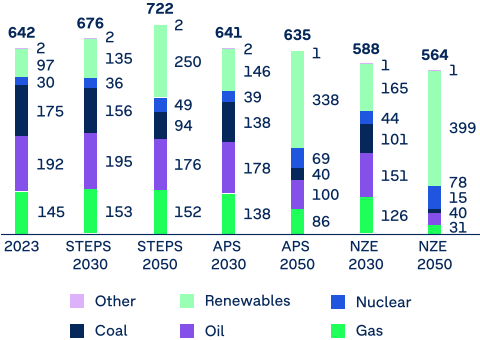
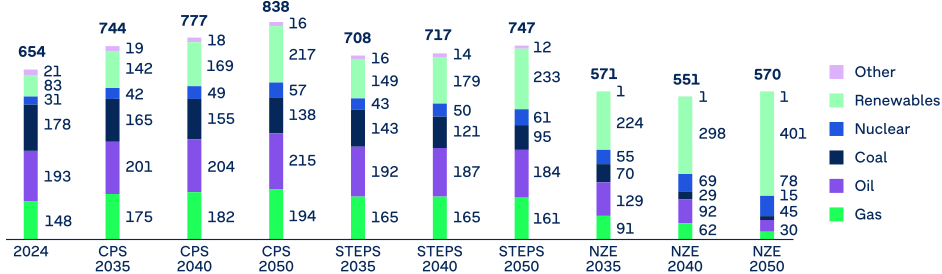
In the Stated Policies Scenario (STEPS), the average annual growth rate of total primary energy supply up to 2035 is around 0.7% and demand continues to increase during the forecast horizon. In the Current Policies Scenario (CPS), total energy demand grows even more quickly due to weaker implementation of energy transition policy. The Net Zero Emissions by 2050 scenario is the only one with decreasing energy needs compared to 2024 and 70% of demand is met by renewables by 2050.
More details about OMV’s scenario analysis can be found in the Sustainability Statement (Environmental Information) and in the Notes to the Consolidated Financial Statements (Note 3 – Effects of Climate Change and the Energy Transition).
Global olefin1 demand
In mn t
1 Ethylene and propylene
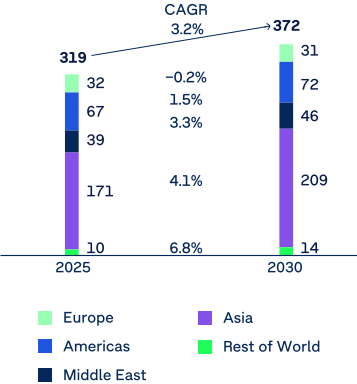
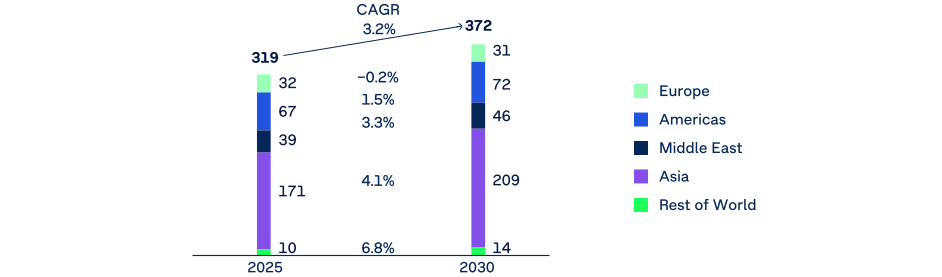
Oil demand for chemical production is expected to increase, primarily due to rising demand in emerging markets and closely linked to GDP development. By 2030, oil demand for chemical production will increase by about 3.2% per year. Chemical and plastic demand growth will be concentrated in emerging markets, mainly Asia, up to 2030 and beyond. Most of the global population growth and the corresponding potential for improving living standards will be located in this region. For mature markets such as Europe and Japan, demand growth is anticipated to remain challenging in the long term, whereas in America, demand growth will be in line with economic development.
Global polyolefin demand (virgin and recycled)
In mn t
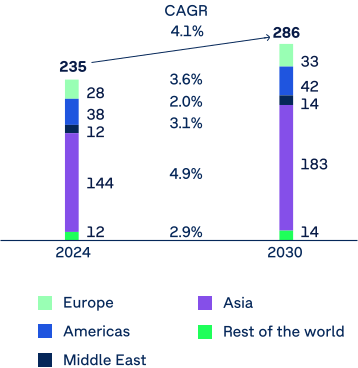
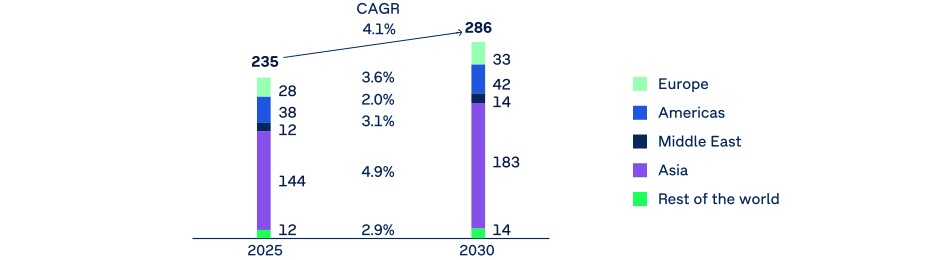
Polyolefins is the largest market segment in producing plastic goods. Demand for virgin polyolefins will continue to grow at a rate above global GDP until 2030, driven by the Asian market. Polyolefins will remain essential for various industries, including packaging, construction, transportation, health care, pharmaceuticals, and electronics. The key success factor for medium- to long-term sustainable business models is growth in renewable feedstocks, bioplastics, and the development of circular solutions. Demand for recycled polyolefins is expected to grow at a rate more than three times faster than global GDP until 2030, with Asia having the largest share.